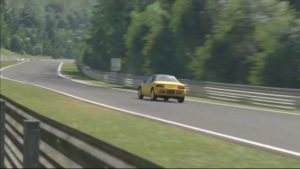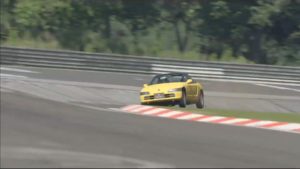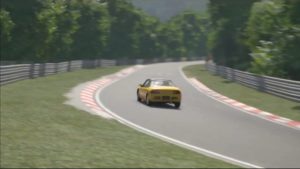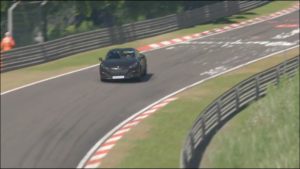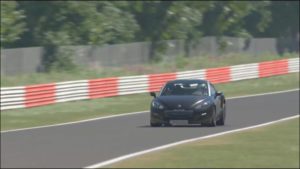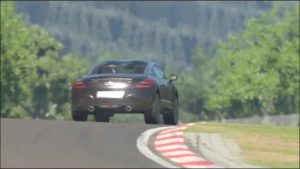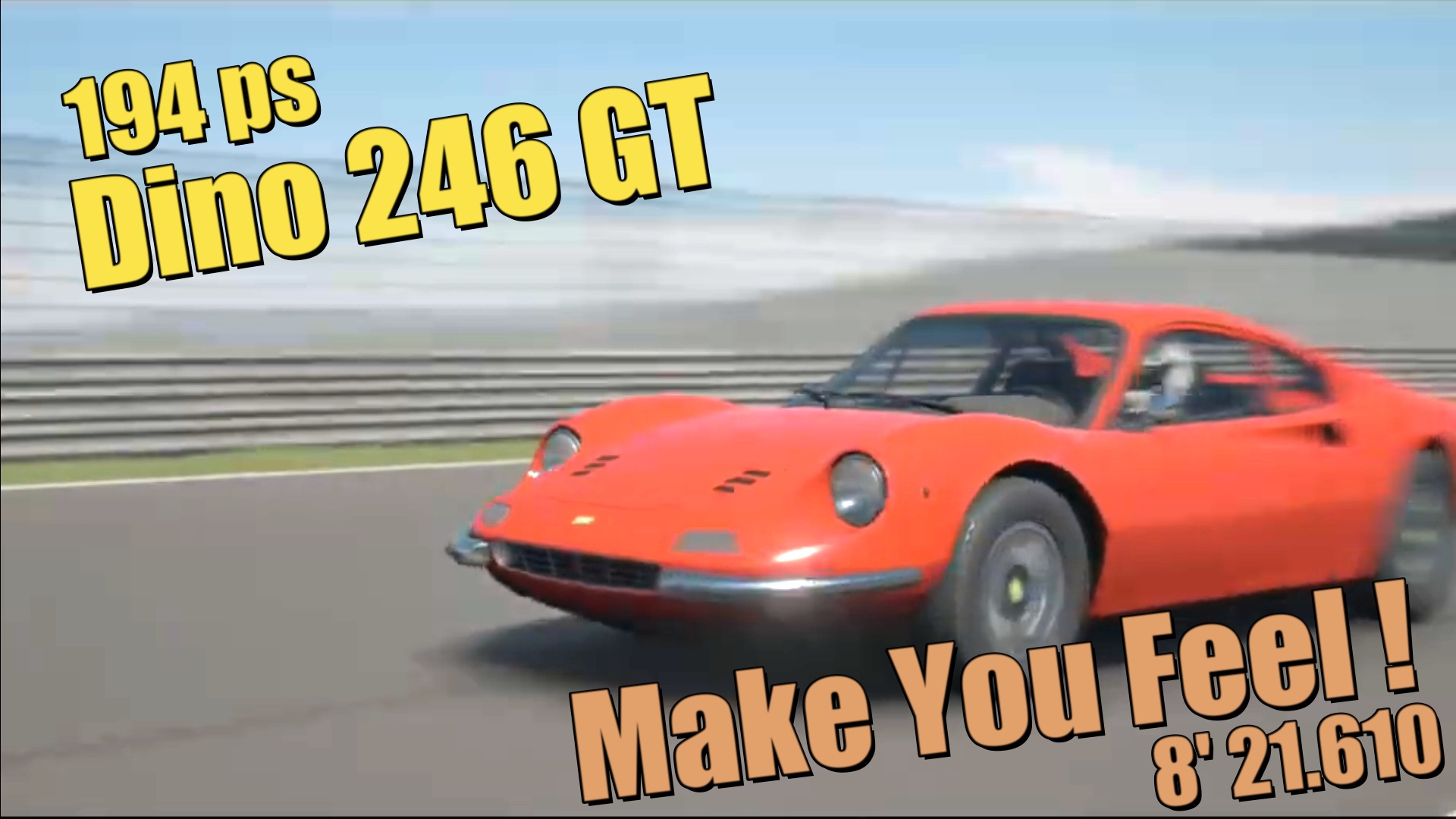
0018: Dino 246 GT [194 ps] at 8’21.610

[Make You Feel!]

It is the compact MR of the V6 2.4 L horizontal engine representing the 1970s.
The steering is very heavy, but the engine is very light.
The feeling of running the cab without stress with the sensual engine sound peculiar to the cab car to the high rotation range is sufficiently effective even in the present age.
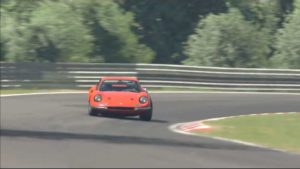
And the car’s biggest feature is handling. Rea is very nervous though he reacts very directly.
Even if you’re a little careless, it immediately triggers a tailslide and makes you scared.
For example, at the high-speed corner Schwedenkreuz (5 km), the rear sped out at high speed, creating a feeling of extreme tension.
This solution is all about turning in at the corner.
Entering the corner while breaking is strictly prohibited.
Even if it is not so, if the steering is operated suddenly, the rear will break.
The key is a highly harmonized approach to turn-in with delicate accelerator work and steering operations.
This is all and is the most exhilarating scene in driving this car.
The accelerator pedal on the right foot is opened and closed in a delicate and detailed manner as the rudder is steered.
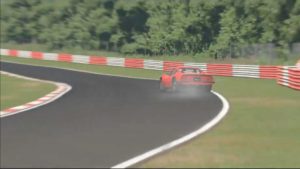
Once you get this cornering, it’s not only fast, it’s fun.
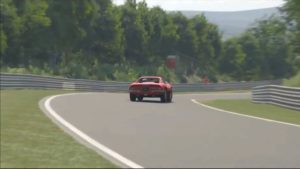
In fact, you will be able to see him running very briskly from after Wippermann (15 km) to goal, with a slight slip of the rear.
It makes you feel like it.
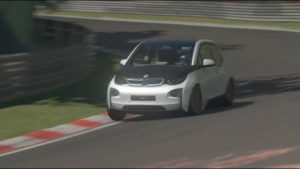
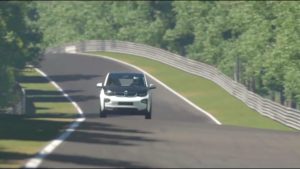
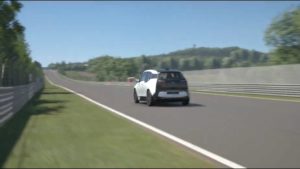
0017: BMW i3 [170 ps] at 9’31.603

[as a Regular Use]

It’s interesting to see how electric cars perform on the Nordschleife.
Needless to say, it is quiet, but it is easy to drive.
Not only because it’s an AT, but also because it extremely steers neutral at high speeds.
So driving is very natural and gives you a perfect sense of security.
In other words, if the accelerator is inadvertently turned on during cornering, the push-understeer appears clearly.
Perhaps because there is a little variation in the torque characteristics of the motor, this behavior appears to be precisely proportional to the accelerator opening, which is also a very natural motion.

Anyway, it seems that the reason why it is so stable is that the center of gravity is so low.
Maybe it’s because the heaviest battery is in a lower position.
In addition, high rigidity seems to greatly contribute to high stability.
The use of carbon monocoque is a synergistic effect of its high rigidity and lightweight.

One of the frustrations of running Nordschleife is that it quickly reaches its maximum speed.
Because of the torque characteristics of the motor, it reaches 140 km/h without realizing it.
As a regular car, it’s probably the best buy.

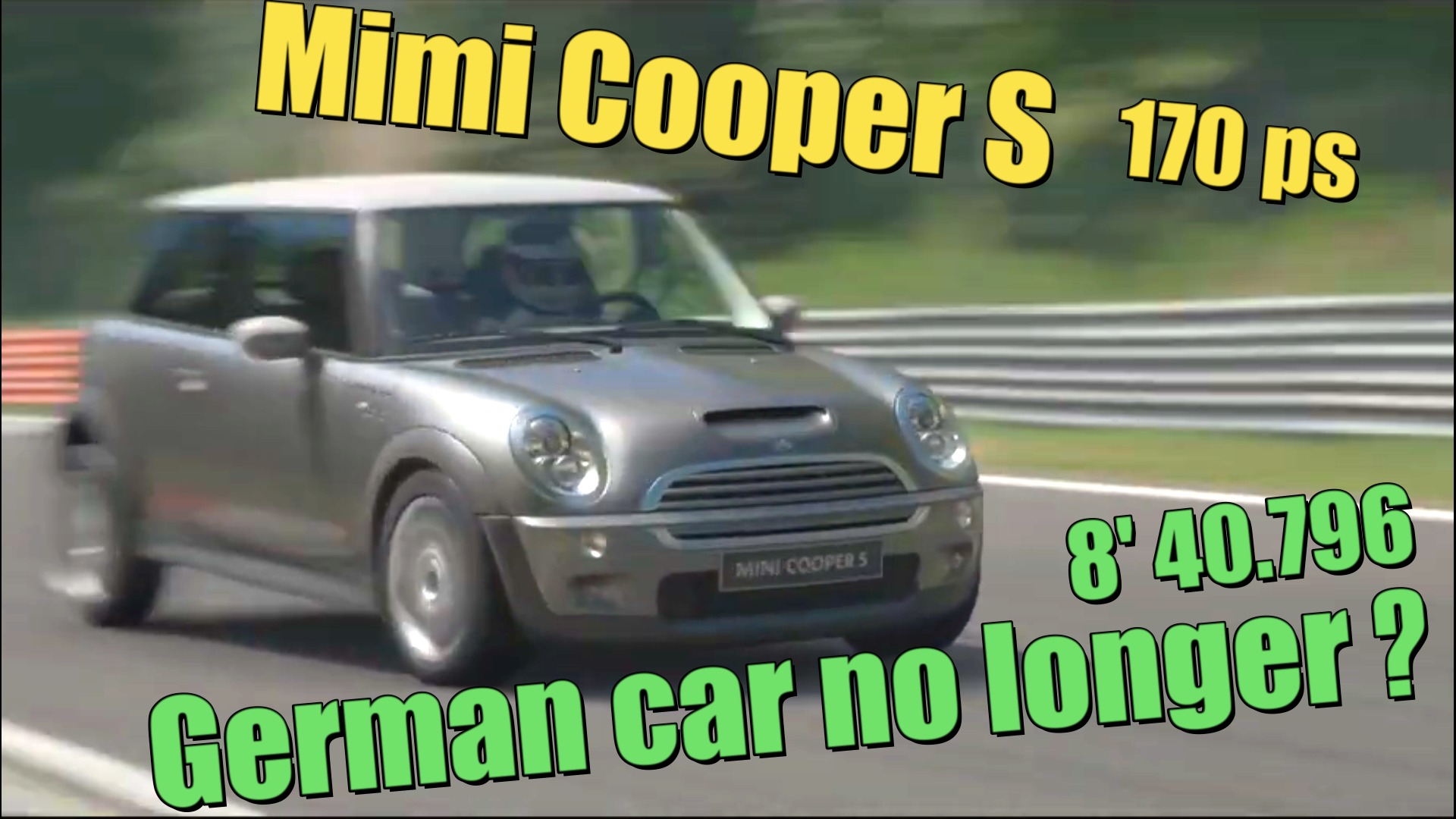
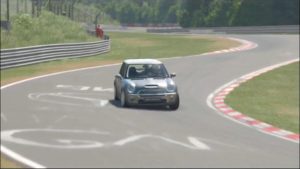
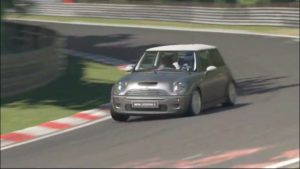
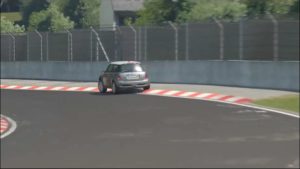
0016: Mimi Cooper S [170 ps] at 8’40.796

[German car no longer?]

Is it a German car now?
The running makes me feel solid all over.
The understeer characteristic of FF is always present.
That would mean a huge load on the CFC tire.
If the driver tries to run through the corner by applying the front load firmly by braking, the load on the front tire only increases, and it cannot shift to a sharp turn.

As you can see from the in-vehicle video, the steering needs to be operated slowly and carefully.
You can’t get rid of Understeer completely, but the car will respond.
This is where you feel the rigidity of the car.

Not only that but what really impressed me was that when the front load reached its maximum after the full braking, the rear load, which is common in FF cars, never broke.
The peace of mind is enormous, and this is where the rigidity of the Mini comes in.
In fact, even when I entered the Breidscheid at an Overspeed due to my simple carelessness, I did not disturb my posture at all even when I did full braking, managed to avoid crashing into the wall, and just removed the line widely, even in the situation where the load fluctuation was big and the stability was big and the behavior was easily disturbed.
German car no longer?

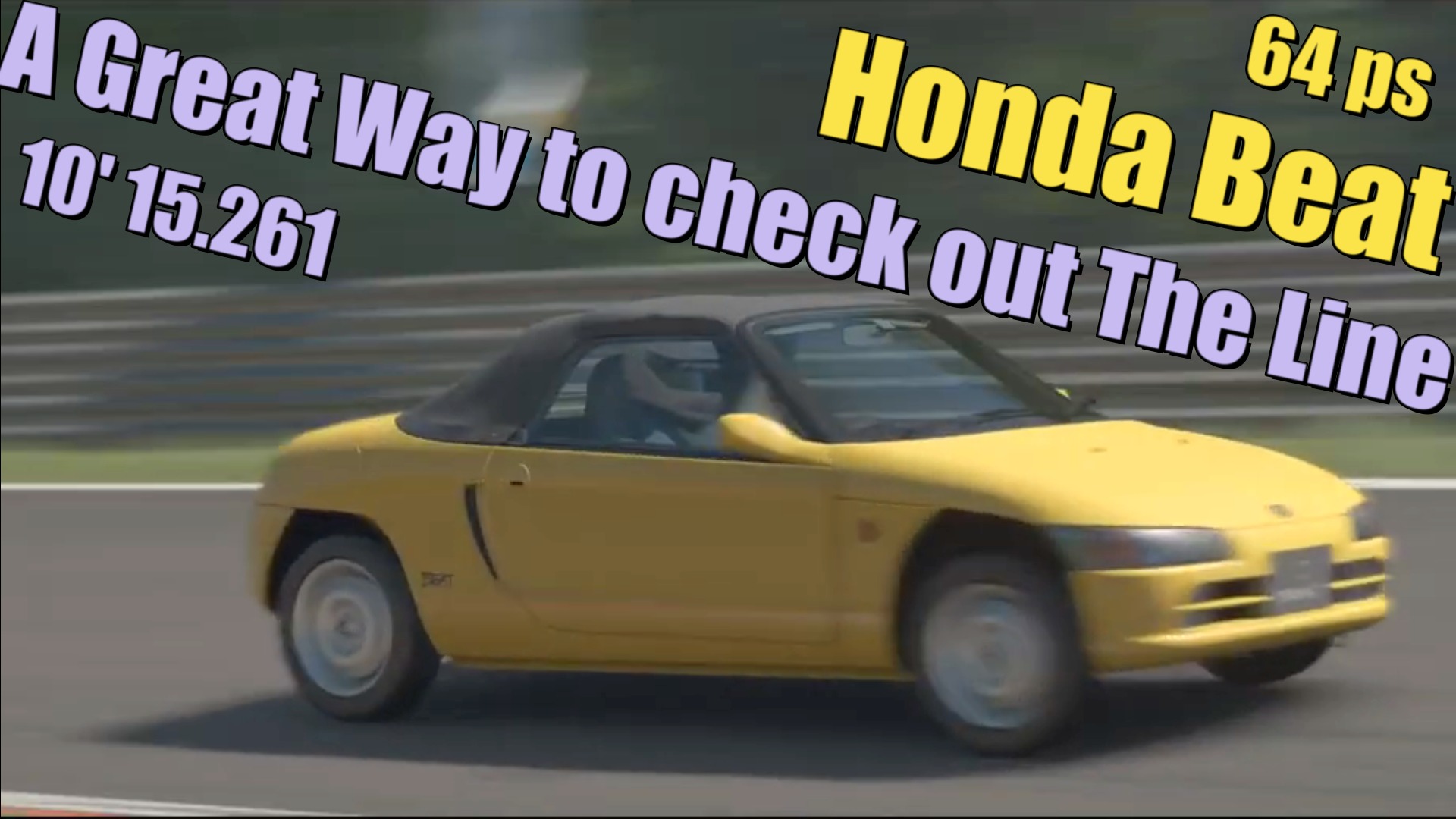
0015: Honda Beat [64 ps] at 10’15.261

[Small Midship]

It’s a very small midship sport.
The engine, which is the heart of this, runs at high speeds without stress, so it is very comfortable.
On the other hand, in a high-speed straight-line section such as Döttinger Höhe, a five-speed MT makes it easy to blow.
There’s nothing to complain about in that regard, but the engine power is decent.
For example, in the Kesselchen, which is a typical uphill section, even if the accelerator is fully opened, the vehicle gradually stalls, and the shift down from the fifth gear to the fourth gear is forced.

On the other hand, the movement performance has no problem in handling, but the rear brakes easily.
You need to be very nervous, especially when entering corners.
They try to enter without dragging the brakes, but they are still terrifying.
In order to solve this problem, when the accelerator is slightly turned on from the partial, the grip of the rear is increased, and the stability is improved to some extent.
That said, the speed is known, so you won’t have to step too far.

This is a great way to check out the driving line for Nordschleife.

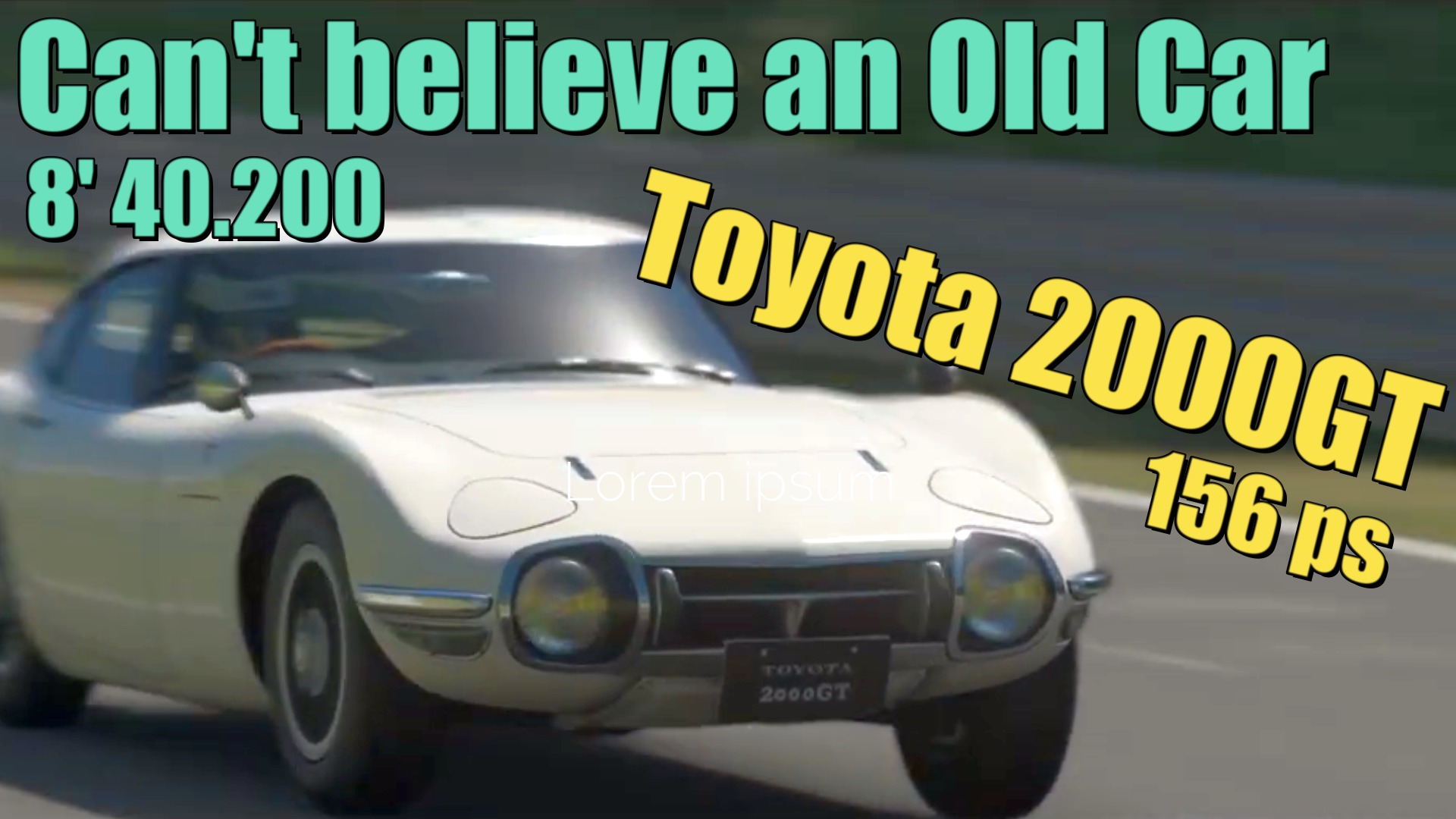
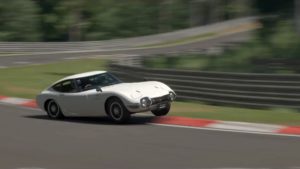
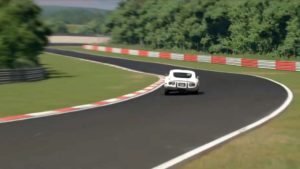
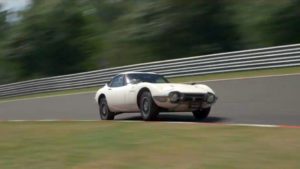
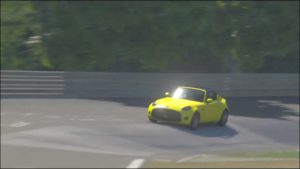
0014: Toyota 2000GT [156 ps] at 8’40.200

[Can’t believe an Old Car]

It is the base car of the car that appeared as an open bond car in the movie 007 (You Only Live Twice).
The carburetor’s unique 6 sound is very comfortable.
Also, as you can see from the video, it runs very smoothly, so it’s very fun.
On the other hand, driving is difficult.
In any case, both the front and rear wheels lack a sense of contact with the road surface.
When I actually drive it, I realize that the grip is weak.
It is not necessarily a tire problem.
It may be a problem of the rigidity of the car body and the geometry of the circumference in the car design at that time.
Therefore, the low grip strength of the front induces understeer, and in the case of the rear, the car breaks without being able to adapt to slight behavior changes.
This makes driving very difficult because both steer characteristics appear with a touch of the ground and poor quality.

But as he continued to attack Nordschleife, he found the driving characteristic of the car.
The theory is that the car is turned in with the brake left by full braking on a straight line, but instead of turning off the steering immediately, it needs to go straight for a while with the brake left.
Then, strangely enough, both the front and rear wheels will grip firmly on the road surface, and the cornering will be relatively safe.

Unlike today’s cars, it seems to take some time to move enough weight.
If you get this, it will run like a fish getting water.
I can’t believe it’s an old car.

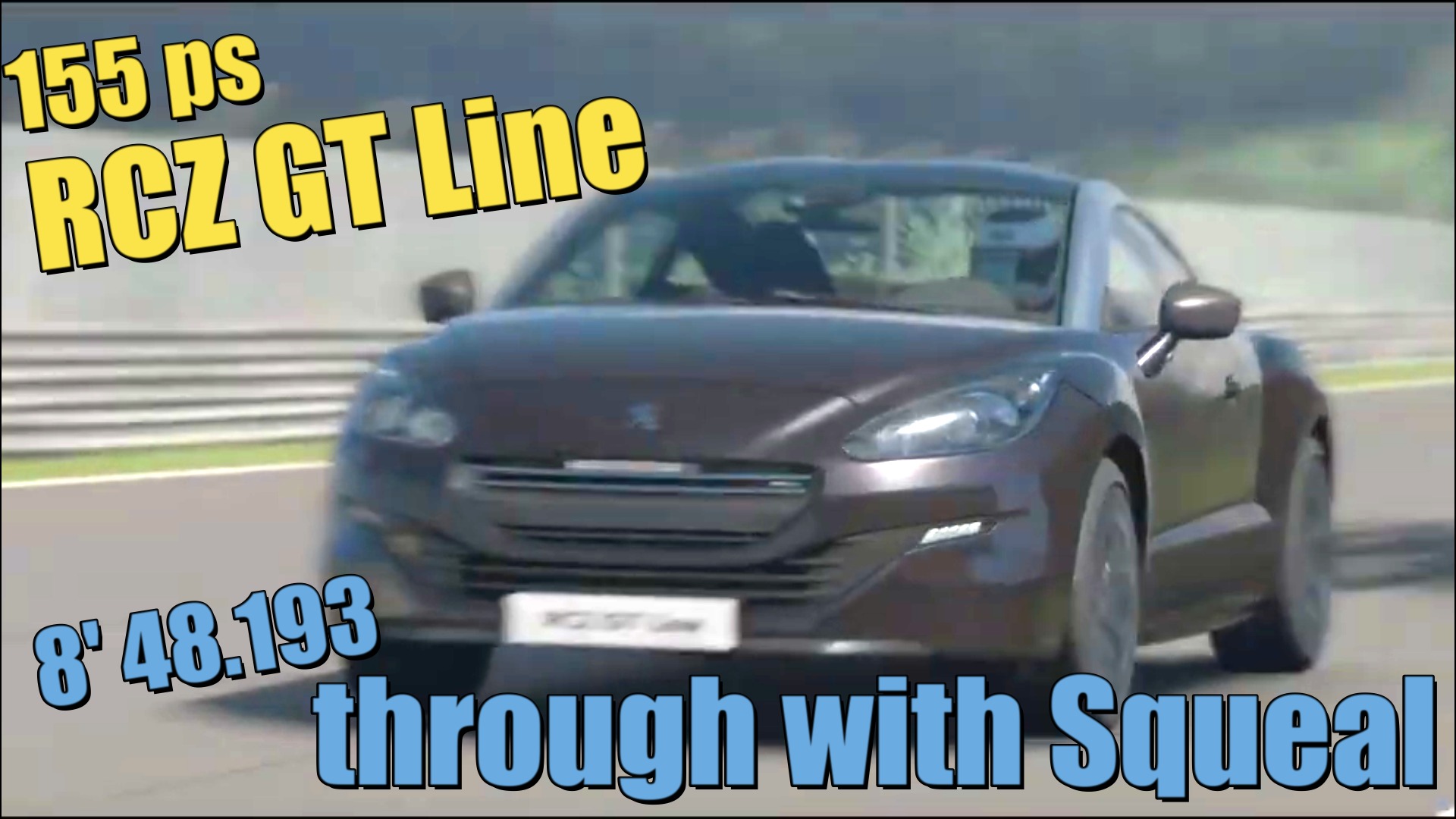
0013: RCZ GT Line [155 ps] at 8’48.193

[through with Squeal]

This FF sport features a sleek body design.
Basically, the front car is heavy and tends to understeer.
Therefore, at the beginning of cornering, driving is performed so as to be intentionally bent.
Specifically, just before entering the corner, the driver applies a load to the front and precisely controls the amount of the brake pedal that is released when the steering starts to turn off so that the rudder responds.
The harmony between the brake work and the steering wheel is the highlight of this car.

However, in this case, it is necessary to pay attention to the full braking just before the corner approach.
Full braking in a straight state with the steering firmly returned is essential.
Otherwise, when a strong front load is applied, the front is heavy, and the rear load is released considerably so that the rear immediately breaks down and is easily carried to either side.
This is a level that can be quickly achieved by repeatedly running in full swing.

In the case of this vehicle, the engine did not rise well over the entire rotational range.
If you look at the booster meter on the on-board video, it seems that there is little superplay.
The car would run through with squeal, using a full curb and maintaining the fastest cornering speed possible.

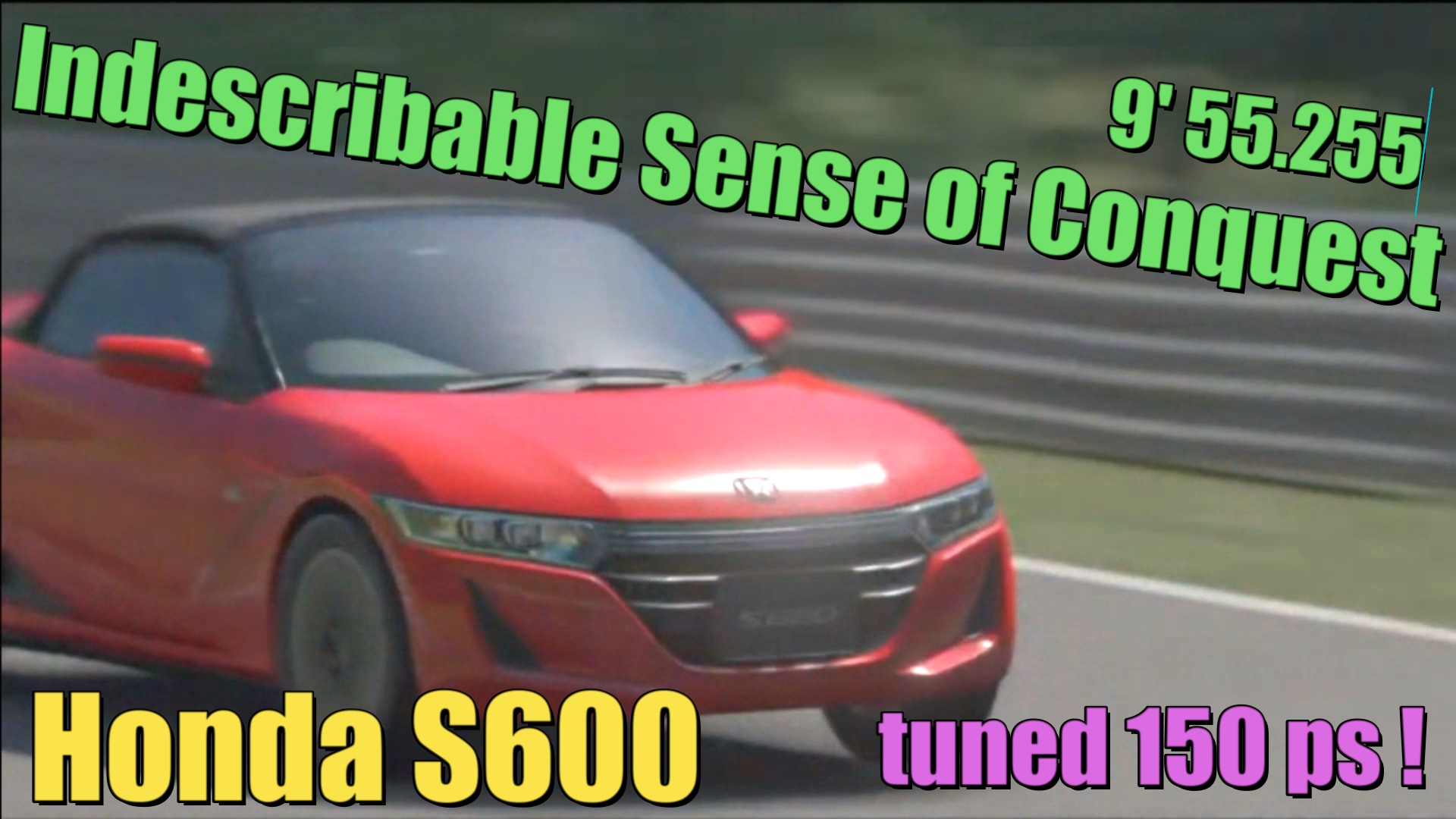
0012: Honda S600 [tuned 150 ps] at 9’55.255

[Indescribable Sense of Conquest]

Since normal motion performance was very comfortable, I applied a tune with increased engine output.
At the same time, I tried a simple setup that increased the suspension damping force and slightly lowered the car’s height.
After all, the engine is very good. It will blow up without any stress.

The problem is cornering performance.
When it was normal, the gentle cornering of the midship layout and the sense of security of the rear, which is the characteristic of this car, were harmonized, and the lightness was outstanding, but it became a severe steer characteristic.
The rear brakes down quickly.
This led to a sense of fear, and it required prudence to slow down sufficiently before entering the corner, and to insert the steering wheel after a short interval.
Can you see the fearful steering on the video?
Therefore, entering the corner while maintaining the front load while leaving the brake is strictly prohibited.
This means that the suspension is softer than the engine output, and it is not possible to cope with the increase in damping force.

Between Wippermann and Brünchen, you can see that they manage to control their attitudes by twitching. In a nutshell, the chassis performance lost to the engine output.
But when you look at lap time, it’s pretty clear that it’s a very fast car of its kind.
With a high-powered heart and a midship layout, the compact body is filled with an “indescribable sense of conquest” that holds everything in its hands.

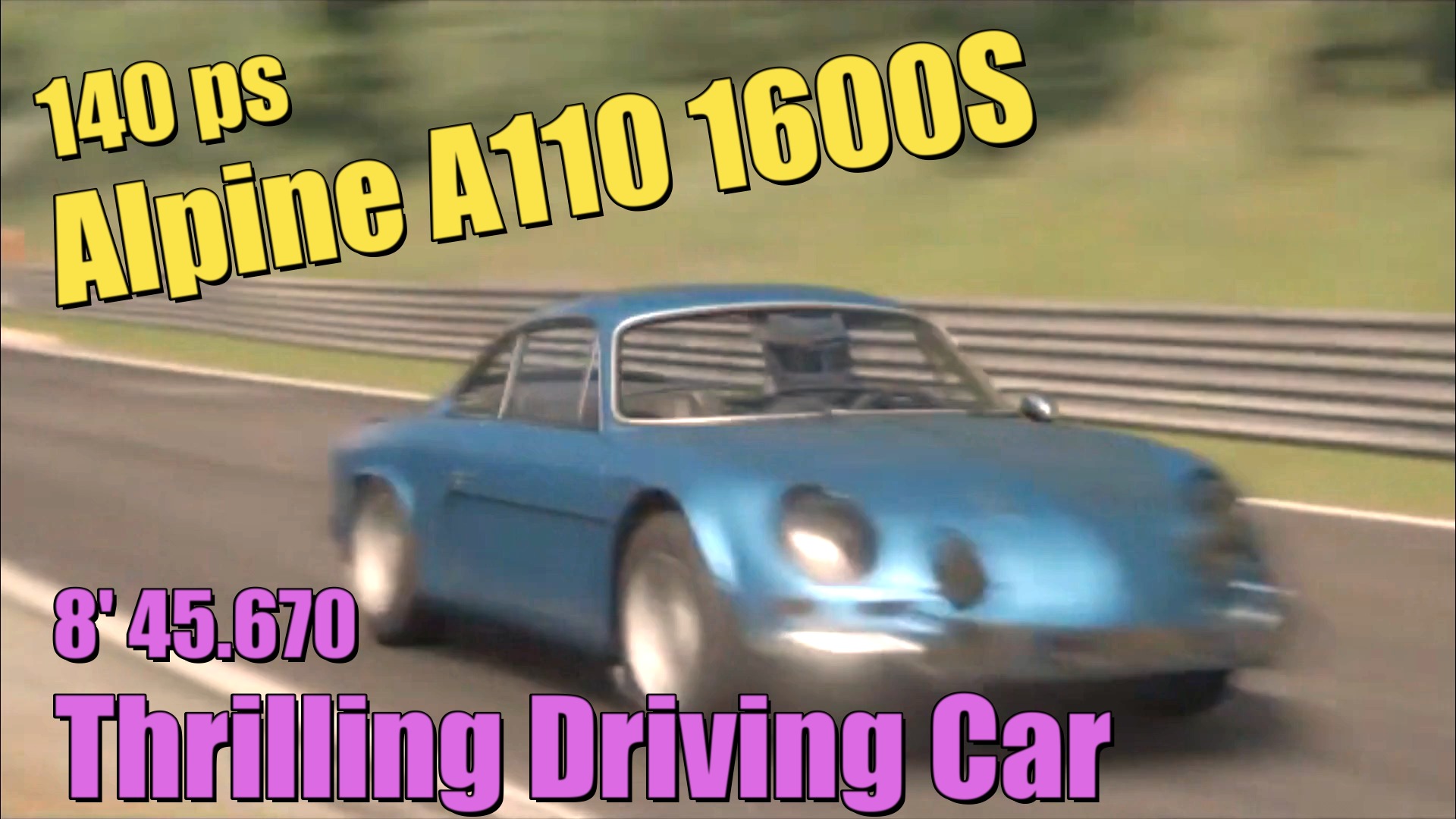
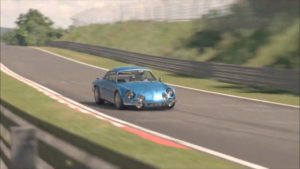
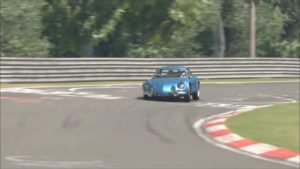
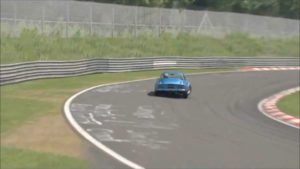
0011: Alpine A110 1600S [140 ps] at 8’45.670

[Thrilling Driving Car]

The engine is very good.
Coupled with the lightweight of the car, the power and torque feeling was in good proportion to the opening degree of the accelerator pedal, and it made me feel no stress, so I could drive smoothly without feeling uncomfortable.

The only difficulty was the severity of Leah’s behavior.
Anyway, the rear starts to flow out at the corner entrance and gives a counter to control it, but it doesn’t stop once it starts to slide out, maybe because it is RR.
It’s more than cornering. Therefore, the brake is completed firmly in the straight line, and the rudder is put slowly.
However, it is very severe and can easily induce oversteer.

I think the only solution is to have a quick counter and to turn while driving the rear when the accelerator is turned on.
It will somehow trace the line you’re thinking about.
By adjusting the suspension settings, the engine is so good that it will be a thrilling driving car that will work well even today.

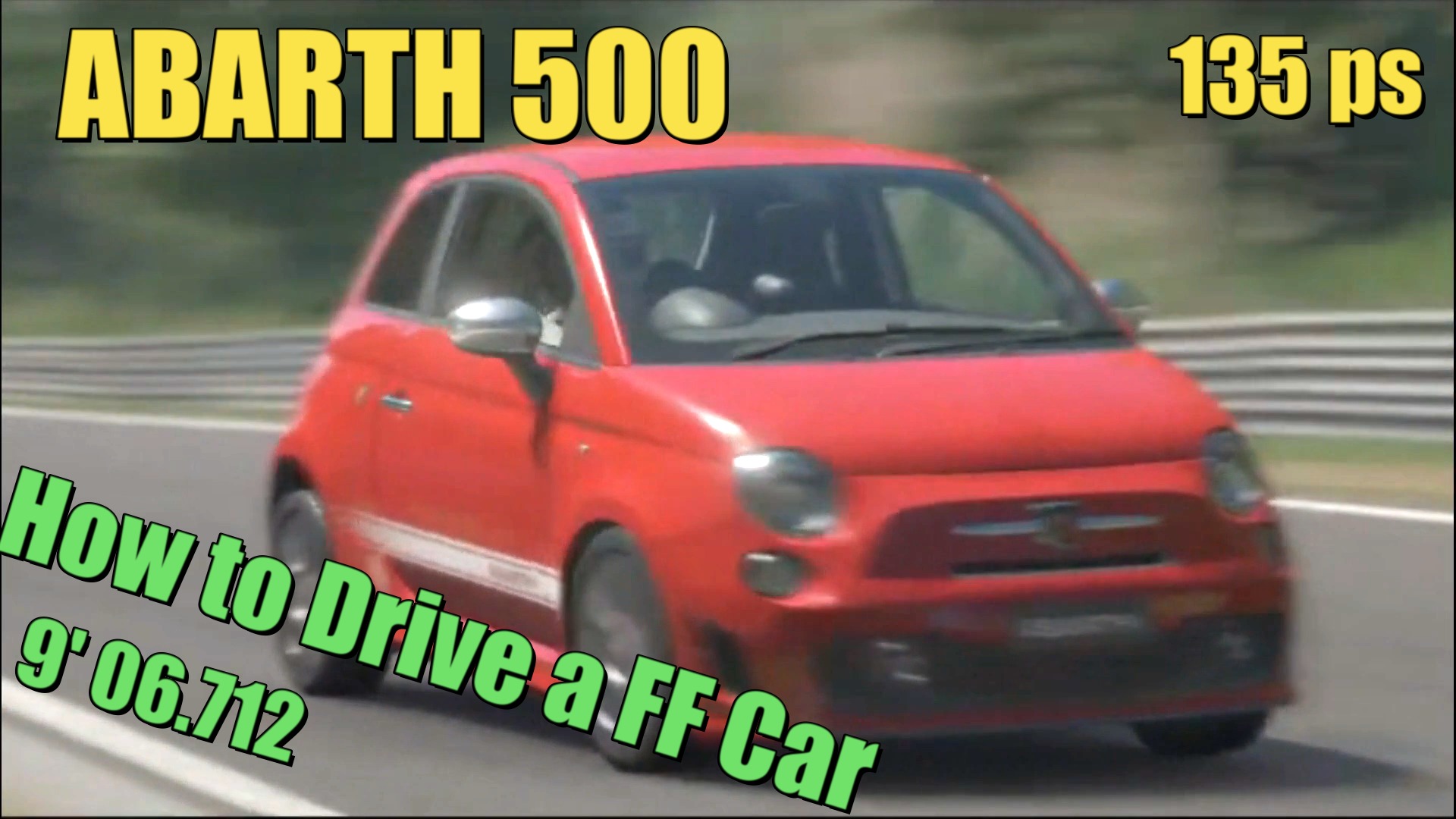
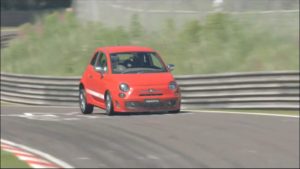
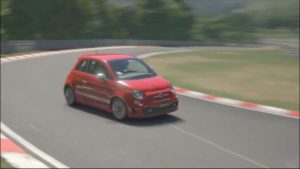
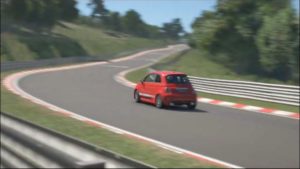
0010: ABARTH 500 [135 ps] at 9’06.712

[How to Drive a FF Car]

It is characterized by the brisk running characteristic of the short wheelbase.
However, it has a reasonable understeer tendency which is unique to FF cars.
And this car will tell you the solution.
It’s all about releasing the brake pedal from full braking.

It starts by giving the front load exactly.
If you turn off the steering, nothing happens. Why don’t you release the brake pedal little by little at that moment?
In proportion to that, you can trace the zebra zone beautifully.
If you feel the harmony between this release and cornering, you will feel refreshed.
It’s also relatively easy to trigger oversteer if you delay the release and hold the brake for a rather long time.

I’m a bit lazy, so I’ll be able to catch a glimpse of myself delaying the release, over-steer, and cornering.
On the other hand, indeed, they don’t like tight, long corners.
Klostertalkurve was able to trace the exact line, but can you see it squealing and struggling with pain?

It tells you how to drive a FF car.

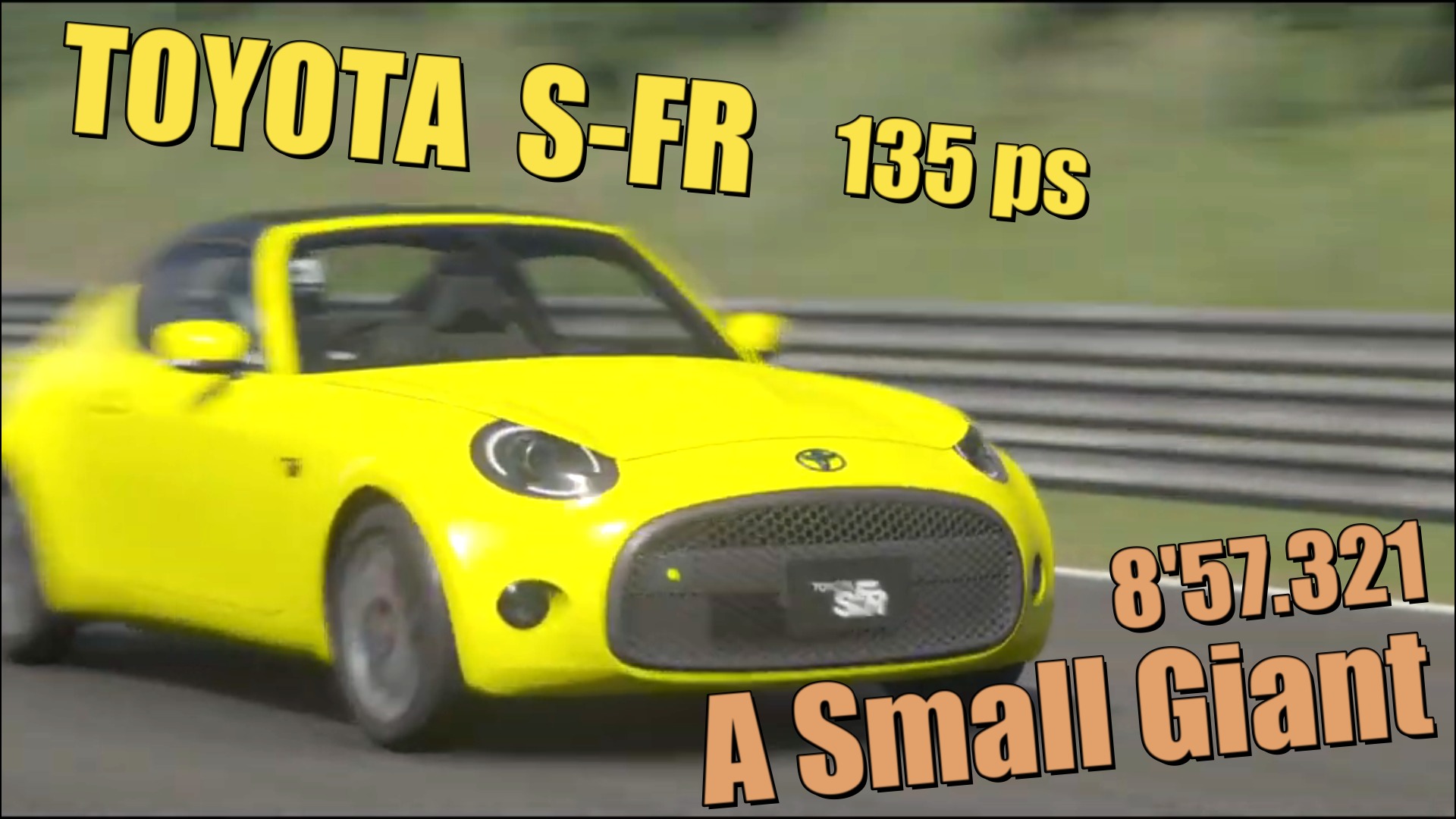
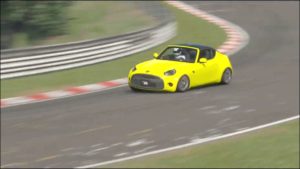
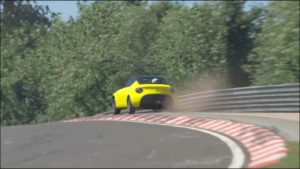
0009: TOYOTA S-FR [135 ps] at 8’57.321

[A Small Giant]

It is the compact FR that I have been waiting for.
It’s a charming face, and I’m tempted by a second car.
When you drive in anticipation of how light and naughty you will be, you will be amazed by the gender.
It has nothing to do with severe behavior, and there is an absolute sense of security that you can press the accelerator without worries in any situation.
It’s a solid chassis.

Especially, the stability of the rear is worth mentioning.
Even rough braking and accelerator operation during cornering do not cause any sudden disturbance in the car’s behavior.
It can be said that there is no possibility of the rear collapsing.
At Karussell, for example, we crossed the line because we were overspeeding, which is usually slippery and disruptive, but we passed with a blank face.
I take my hat off to this sense of security.

The same can be said of Schwalbenschwanz, which is on the outside.
It’s too bad that such a small giant has been discontinued.